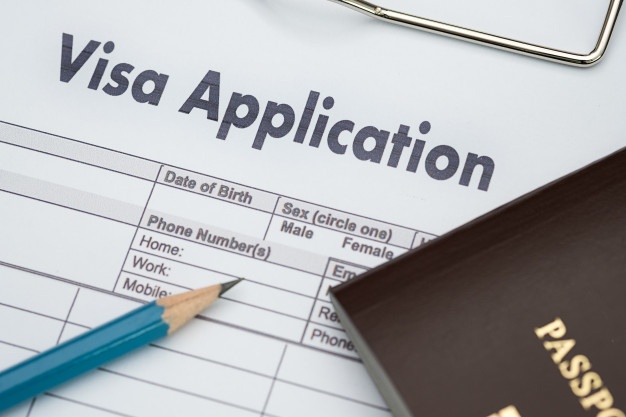
WHY MUST YOU GET HOTEL RESERVATION FOR SCHENGEN VISA APPLICATION?


Hotel itinerary or dummy hotel reservation for visa application refers to a hotel booking that’s created just for the visa application purpose. It’s a reservation created by a verified travel agent, which is able to be cancelled later once your visa approved.

The advantage of obtaining a dummy hotel reservation for visa application is that you simply do not have to obtain the complete price of the hotel accommodation for a hotel reservation document, however instead simply pay a small charge for the reservation document only.

HOTEL RESERVATION FOR VISA APPLICATION:

Well, there’s couple alternative choice accessible. If you have a friend or relative who lives within the country you intend to visit, you will raise them for an invitation letter, providing if they’re comfortable to produce the verification documents mentioned above. It will cause a hassle to your friend or relative, not to mention if they willing to reveal their personal data in those demand document to you.

The other alternative is to directly book and pay a full value hotel online. That means you’ll get an actual confirmation letter or email to indicate proof for your hotel reservation for visa application. What happens if you don’t get your visa on time or it doesn’t get approved? 

Most hotel reservation engaged online does not supply cancellation or refund, and if they are doing, you’ll undoubtedly lose a minimum of 1-night cancellation fee. If you do choose the particular full value hotel reservation, check that you browse through their refund and service terms. Most hotels don’t supply cancellation for reservation but 30 days. This can be additional complicated if you propose to book the hotel for multiple cities.

Your best option is to get a hotel itinerary for visa application from Schengen visa itinerary this eliminates all of your trouble and concern. It might also prevent variant cash if your visa application is delayed or denied. For a tiny low service charge, you’ll be able to get a hotel reservation that you simply can either use at once for your visa application or request for change of dates from Schengen visa itinerary shall there’s any circumstances change on your visa application.

With like change and convenient service from Schengen visa itinerary, you’ll even request for multiple hotel reservation. Your travel itinerary is going to be issued for you seamlessly while you place your order. You’ll get pleasure from more time designing for your trip.

For more information, Please visit: schengenvisaitinerary.com
Can you enter the UK with a Schengen Visa and How to apply for a Schengen Visa from the UK?


ILR holders who have stayed in the country for at least three months can apply for a Schengen Visa for UK residents.

If this is your case, to get your Schengen Visa from the UK, you need to submit the following documentation:

·                     A copy of your passport, which should have been issued no more than ten years before the time of your application. It should also contain at least two blank pages;

·                     Proof of your ILR status in the UK. Alternatively, you can provide a copy of your Biometric Residence Permit.

·                     Your Schengen Visa application form;

·                     A passport photograph complying with the Schengen standards;

·                    Travel insurance with a minimum cover of €30,000;

·                     A confirmed travel itinerary, including transportation and accommodation reservations;

·                     Proof of sufficient funds to cover your journey;

·                     A cover letter stating your purpose to visit Europe.

Can you enter the UK with a Schengen Visa?

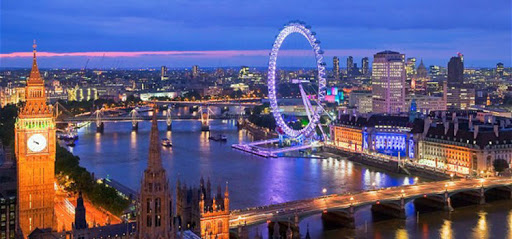
Although it is an EU state member, the UK is not part of the Schengen system. Consequently, if you are a non-EU or EEA national, you cannot enter the UK with a Schengen Visa.

Since the UK has an opt-out from the Schengen policy, border officers can check people coming from the rest of the EU. In other words, not all travelers may be entitled to enter the UK. However, due to EU rules on free movement of people, the UK must admit EU citizens unless they are committing any immigration fraud.

To pass the UK border checks, non-EU nationals need a Standard Visitor Visa. You can submit your application at the British Consulate General of your home country. If you are already travelling abroad, you can still lodge your application with every British consulate in the world.

Before you apply for a national visa, it is worth checking if your home country falls under the list of countries that need a permit for the UK.

Can you get a Schengen Visa and a UK Visa at the same time?

TheSchengen Visa and UK national visas are different permits. Subsequently, you must submit two separate application to the UK embassy in your country and the consulate of your destination in the EU.

If you wish to visit the Schengen Area and the UK as part of the same trip, you can combine the two destinations. You still need to meet the requirements for both permits and have the required number of blank pages on your passport.

If you are travelling and you wish to apply for Schengen Visa in the UK, the process will differ based on your immigration status in the country.

Why Schengen is important?

Knowing about Schengen area is probably the most important for travelers, immigrants and those who seek citizenship in the EU member states. This is could avoid so many problems in the future!

Sometimes EU and Schengen area may be confusing to many outsiders and third country nationals.

For example, Cyprus, Bulgaria, Romania and Croatia are not even Schengen countries at all. They may join in the future, but not yet.

Importance of Schengen:

You can avoid so many problems associated with your travel and immigration status, just by having a little knowledge about Schengen area and countries.  For example;

1.         First understand which countries are in Schengen and in Non-Schengen.

2.         Leaving the Schengen area (e.g. Croa) and coming back requires a multiple entry visa. You would be stranded with single entry can can’t come back.

3.         Sometimes you won’t even know you left the schengen area (e.g. you visited Monaco). With the Covid-19 crisis and everything almost all schengen countries have reinforced internal borders so more checks.

4.         You apply for citizenship in a country that is not a schengen member (e.g. Cyprus). Note there is an important distinction with citizens and residents. Free movement is not restricted to citizens. If you become a Cypriot citizen, you become EU citizen and your free movement won’t be restricted, despite Cyprus being a non-schengen state. Cyprus applied for membership last year in Sep 2019.

5.         Residence permits or visas issued by non-schengen states is not valid for visa travel in the Schengen area. This is very important. Our advice is don’t apply for golden visa programs in non-Schengen countries.

6.         Important differences! SchengenVisas are only valid for short term (less than 90 days) while residence permits are valid for more than 90 days (D visa). A residence permits probably give you more rights in the Schengen area, such as access to education, healthcare, work etc.

The Schengen Area

The Schengen Area is an area comprising 26 European states that have officially abolished all passport and border control at their mutual borders functioning as a single jurisdiction for international travel purposes, with a common visa policy. The area is named after the 1985 Schengen Agreement.

As of 2020, 22 of the 27 EU member states participate in the Schengen Area.

EU-member states:

22 EU countries that are part of the Schengen area borders

Austria, Belgium, Czechia, Denmark, Estonia, Finland, France, Germany, Greece, Hungary, Italy, Latvia, Lithuania, Luxembourg, Malta, the Netherlands, Poland, Portugal, Slovakia, Slovenia, Spain and Sweden

Non-EU member states

These four EFTA Associated countries also participate in the schengen area:

Iceland, Liechtenstein, Norway and Switzerland

Note: These four country citizens are not EU citizens

Non-Schengen members       

•           EU member states: 4 EU members that are not part of the Schengen Area —Bulgaria, Croatia, Cyprus, and Romania—but are legally obliged to join the area in the future

•           Defacto Microstates: Monaco, San Marino, and Vatican City

•           Opt-out State – Ireland opted out therefore not part of Schengen area

•           Territories – Territories of French, Dutch and British not part of schengen area

•           Candidates – Montenegro, Albania, Serbia, Turkey and North Macedonia

•           Potential candidates – Bosnia and Herzegovina, Kosovo

Note: Schengen states should not be confused with European Union.    

The steps that an applicant will have to go through should he/she intend to apply for a Schengen VISA.


1.         Download an application form from the internet and fill it completely and sincerely. The application form can be found in the embassy/VISA center website of the country you’re applying for. You can electronically fill in the form and print it out directly and sign each page if necessary.

2.         Prepare the required documents with both the original and photocopy versions available. (for the list of requirements, keep scrolling!)

3.         Schedule an appointment. You must make an appointment online before going to the Schengen Visa Application Center. Embassies which aren’t under any VISA center will accept walk-in applicants during their designated timings.

4.         Submit the documents to the VISA center or to the embassy. Lodge your application personally and have your bio metrics taken on the date mentioned in your appointment slip. Please be advised that embassies and VISA centers are very strict with the appointment time. Applicants who come in late — regardless of the excuse — will not be entertained (especially if the schedule is full).

5.         Pay the appropriate VISA fee amount as well as service fees. You can pay directly to the VISA centers or the embassy itself. Convenience fees (or service charge) are levied on the total billed amount made using debit or credit card either online or at the VISA center. Please note that these fees are non-refundable and subject to change as per the embassy policy.

6.         Track your application. As perusal procedure, approval takes 5-10 working days (could be earlier or longer depends on the documents submitted). The embassies or its VISA application centers do not process rush applications so be sure to give enough allowance before your flight. Application tracking may be done online and afterwards, original passport with the VISA stamp shall be available for collection at the VISA centers.

7.         IMPORTANT: Double check the details on your visa as any minor difference or mistake can cause more trouble when you are already on your flight.

For more information, Please visit: https://www.schengenvisaitinerary.com/

Flight booking and travel itinerary for Schengen Visa: why are they required

Introduction

A flight booking and travel itinerary are key documentary requirements for a Schengen visa. In this article, we discuss the relevance of these documents in an application for a Schengen visa. Depending on the purpose of your visit, your visa may be refused if you fail to submit either of these documents.

Travel Itinerary:

An itinerary is simply a document that details your travel plans. It usually provides details of hotel bookings, flight arrangements, and daily activities or schedules for the duration of your stay. An itinerary is only required for journeys undertaken for tourism or private purposes. It must usually specify the places you intend to visit by way of schedule of activities.

Article 14(1)(a) of the Visa Code states an applicant for a Schengen visa shall present documents indicating the purpose of the journey. Further, Annex II (A)(3)(b) of the Code states that for journeys undertaken for tourism or personal reasons, the applicant must submit documentation relating to their itinerary. The Visa Code describes itinerary to include “confirmation of the booking of an organized trip or any other appropriate document indicating the envisaged travel plans.” Bookings on organized trip or tour guides, and tickets for entry into tourist sites could be submitted as evidence of itinerary.

A key requirement of an itinerary is that it must be plausible. The schedule of activities must be arranged in a manner as to make your plans credible. For example, it may be more reasonable to visit tourist sites that are in close proximity to one another on a particular day, rather than a disjointed schedule of visits that are miles apart from each another and lacks coherence. If your itinerary is implausible or disjointed, this may raise doubts on the credibility of the purpose of your visit and may cause your visa to be refused.

Another requirement is that the duration of the itinerary must be consistent with your travel dates. Specifically, it must be consistent with the travel dates as shown on the visa application form, flight booking, hotelreservation, and travel medical insurance. If your itinerary shows discrepancies with travel dates shown on other documentation, your visa may be refused.

Flight Booking:

A flight booking is a document that shows that you have booked a place on an airline to travel at a future date. It specifies your departure and return dates, and any connecting flights, if applicable. You must submit a flight booking regardless of the purpose of the visit. You can make a flight reservation either by yourself or through an agent.

Article 14(d) of the Visa Code states that an applicant shall present information enabling an assessment of their intention to leave the territory of the Member States before the expiry of the visa. And Annex II B (1) of the Visa Code lists “reservation of or return or round ticket” as one of the documentations that may be submitted in proof of intention to return. A flight booking is therefore a key documentary requirement for a Schengen visa.You must consider this information when making a flight reservation either by yourself or through an agent:

o          the document must specify your name;

o          It must clearly show your arrival and departure dates and times;

o          It must show the flight name and a valid reservation number;

o          It must show details of any connecting flights;

o          It is must show a return reservation. A one-way reservation will not meet the requirement.

o          Your travel dates must be consistent with the dates on your visa application form or other supporting document. If there are discrepancies, this may lead to a refusal;

o          Do not buy a ticket unless the Embassy specifically requests you to do so.

Conclusion:

A Schengen visa is generally a documentary application. However, it is not sufficient to provide documentation merely because they are required. Keeping these details in mind may save you time and unnecessary expense that may result from a refusal.

What is the importance of Schengen Visa Insurance and Is it compulsory to take?


Schengen Travel Insurance

One of the most important requirements while traveling abroad is to have a valid travel health insurance policy in place to combat any unforeseen medical emergencies. A person traveling to the Schengen zone or the citizens of any country within the Schengen area are highly recommended to purchase a suitable Schengen TravelVisa Insurance for the expecting visitor from another country as the guarantor of the visitor.

The importance of Schengen Visa Insurance

The majority of European countries come under the domain of Schengen regulations. The Schengen area includes-Austria, Belgium, Czech Republic, Denmark, Estonia, Finland, France, Germany, Greece, Hungary, Iceland, Italy, Latvia, Liechtenstein, Lithuania, Luxembourg, Malta, Netherlands, Norway, Poland, Portugal, Slovakia, Slovenia, Spain, Sweden, and Switzerland.

All the above 26 countries mandatorily require Schengen travel insurance, without which it is not possible to obtain a Schengen visa. Hence, anyone who is planning to travel to any country in the Schengen zone is needed to buy suitable Schengen travel visa insurance also known as Schengen visa insurance or Schengen visa health insurance.

Is Schengen Visa Insurance compulsory to take?

Among the many requirements taken into consideration when applying for theSchengen visa, one is to have mandatory travel insurance.

Travelers who wish to visit Schengen zone need to factor in any kind of unforeseen expenses that might crop up. There are several reasons why it is inevitable and should be considered with due seriousness. The importance of the Schengenvisa insurance can be summed by the significant excerpt from Regulation (EC) No810/2009 of the European Parliament and of the Council in 2009, which is as follows.

“… Applicants for a uniform visa for one or two entries shall prove that they are in possession of adequate and valid travel medical insurance to cover any expenses which might arise in connection with repatriation for medical reasons, urgent medical attention and/or emergency hospital treatment or death, during their stay(s) on the territory of the Member States.

The insurance shall be valid throughout the territory of the Member States and cover the entire period of the person’s intended stay or transit. The minimum coverage shall be EUR 30,000”.

What is a Flight Ticket? How to Get Verifiable Flight Itinerary for Your Visa Application Without Paying for an Actual Ticket?


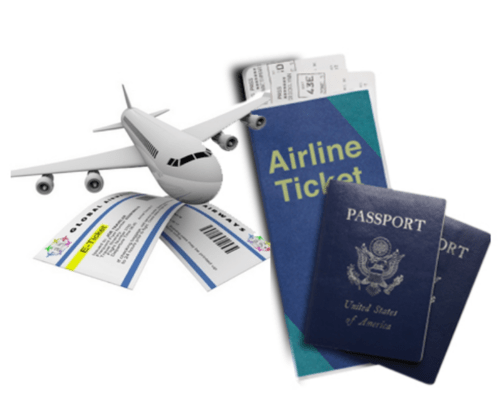
A flight or airline ticket is either a paper-printed or an electronic document, purchased by a traveller from an airline company or a travel agency. The ticket proves that the traveller has a reserved seat on an airplane, which will take him / her to their destination.

Almost all Embassies or Consulates of the Schengen Area are clear towards their visa applicants, telling them not to buy the full Air Ticket before the visa will be actually issued.

Still, sometimes you will not get along with visa requirements submitting only the Flight Itinerary and Flight Ticket Reservation. This since particular Embassy or Consulate of Schengen country has the authority for asking you to provide the actual Airline Ticket, if it needs to make sure you actually have a planned trip to a specific destination in Europe. Most of the Embassies or Consulates accept Round-trip Flight Reservation with a Flight Itinerary as a form to prove you have a prearranged journey. Though, they want you to provide the actual Flight Ticket once you get your visa approved.

The moment you own a Flight Ticket, you have in your hand the ticket with which you can travel to your destination, once getting the visa. We recommend you not to buy the full Air Travel Ticket before being certain you will getyour Schengen visa approved. If failing to follow our advice, you can risk losing your money on a costly Flight Ticket without actually travelling to your planned destination.

How to Get Verifiable Flight Itinerary for Your Visa Application Without Paying for an Actual Ticket?

Gettinga flight reservation or itinerary and hotel booking is very simple. Fortunately, a lot of company offer this service online nowadays. However, it is very important to ensure that you are working with the right travel company. You need a company that can give you a verifiable flight itinerary that can be accepted by every embassy. Your travel agent should also be able to deliver this itinerary very fast without charging you a lot of money.

The easiest way to get your flight itinerary and hotel booking for your visa application is to follow the steps below:

1. Visit Flight Itinerary for Schengen Visa choose the package that is rightfor you.

2. Choose hotel booking if it is required

3. Submit your travel details by filling the form properly.

4. Make your payment online and instantly you will receive the invoice from company side on your email address.

1.         And after the given time period simply check your email for your flight itinerary (and hotel booking)

Conclusion:

Working with reliable and trustworthy flight itinerary travel company the visa application process very easy. Remember, an embassy can ban you from ever visiting their country if you use an unverifiable flight itinerary. Always work with a company that is reliable and provides a flight itinerary that can be easily verified by any embassy.

Is Travel Insurance Necessary for Europe?


Many U.S. citizens are under the impression that health care in Europe is ‘free’ and they question whether travel insurance is necessary for Europe.

According to the Department of Health UK, hospital treatment through the National Health Service (NHS) “is free only to people who live on a lawful and properly settled basis (‘ordinarily resident’) in the United Kingdom (UK).”

With some exceptions, if you do not normally live in Europe, you will have to pay for any medical treatment you receive regardless of whether you are a citizen or have lived or worked in the UK in the past.

The following are the exceptions:

•           Emergency treatment given inside an Accident and Emergency department or NHS emergency walk-in center. Treatment given after admission into a hospital is not free.

•           Treatment for certain infections diseases (including STDs, but excluding HIV/AIDS) when it is the first diagnosis and connected to counselling sessions.

•           Compulsory psychiatric treatment

•           Family planning services

This means that any treatment beyond the initial emergency care and non-emergency treatment will incur a charge. For example, if your child starts running a fever and you take the child to a doctor, you’ll need to pay for that medical treatment out of pocket. After all, a fever – while concerning to you as a parent – is not a qualified medical emergency.

Other than the above, overseas visitors are charged for their hospital treatment unless they are otherwise entitled to NHS hospital treatment free of charge. The list of these people includes students living in the UK less than 6 months, refugees and asylum seekers, diplomatic staff working in embassies … and the list goes on. In short, the casual traveler from the U.S. is not included.

It’s important to recognize the following three things when you’re deciding whether or not to get travel insurance for a trip to Europe:

1.         Travel insurance has a lot of benefits in addition to medical care – like trip cancellation, interruption, evacuation, and repatriation – to cover the priciest travel disasters.

2.         Even if your emergency medical care is covered, you will still have to pay for prescription charges and other charges levied by the medical facility.

3.         Travel medical coverage is typically really cheap – it’s simply not worth NOT having it.

Ultimately, it’s the traveler’s decision whether or not to take the risk and travel without travel insurance, but given the fact that the largest portion of any full-featured travel insurance plan is the cost of insuring trip cancellation and interruption, it really makes no sense not to have travel medical coverage – even when you travel to Europe.

 If you’re thinking of traveling to Europe, you’ll need to get your Schengen visa application started as soon as possible. As you may be aware there are a lot of documents that you need to supply to the embassy or consulate you’re dealing with. One specific piece of evidence you will need to provide is proof that you have adequate travel insurance. Without this, your application may well be rejected.

If you’re not sure how to go about purchasing a suitable travel insurance policy for a Schengen visa this article will give you all the information you need.

Why do I need a hotel reservation for visa applications?


Traveling these days is a lot different from what it used to be. Hearing stories of how others bribed the border patrols in Burma to travel the Golden Triangle or were starving with a stomach bug on a train trip through Europe makes anyone wish they were born 50 years ago; when traveling was a slower, present state of flow (or starvation). Not full of smartphones, Instagram-updates, flash packers and…. PAPERWORK…

These days you need a visa to travel to most countries or continents, and the embassies require a lot of information from you; including a hotel reservation for visa applications. It takes the spontaneity, flexibility and not to mention FUN out of traveling. So how do you go about getting all the required documentation, including a hotel booking for visa applications without paying the full price or being denied the visa? Schengen visa flight reservation exists for this exact reason. We have been in your shoes, without finding any solution other than to actually book expensive flights, and that was even something the embassy did not recommend.

That’s why we created a Schengen visa flight reservation; a way for everyone to get their flight, hotel, train or bus itineraries for the price of a few cups of coffee. Contact us anytime on WhatsApp with any questions you might have about hotel reservations for visa applications.

A quick Google search for “hotel reservations for visa applications” or the even more popular “flight reservations for visa applications” will give you a few different options:

•           Just book a hotel (and lose the money if your trip plans change)

•           Book a hotel and cancel the booking later (and lose money when you don’t remember to cancel 2 out of the 20 hotels you needed for your Euro-trip, or when you missed the small writing on the cancellation policies, or maybe you don’t own a credit card and can’t actually make the booking?)

•           Make a fake booking in Photoshop (and have your visa application denied when the Chinese embassy calls the hotel to verify your booking.)

For more information, Please Click Here: https://www.schengenvisaitinerary.com/

What is not covered under Travel Insurance and Why do you need travel insurance for a Schengen visa?


There are certain things that are not covered by travel insurance and you need to know what they are.
When you are considering which policy to buy, you must take note of these exclusions. In addition, the terms and conditions regarding any exclusions may vary between insurance companies, so it’s advisable to check thoroughly before purchasing the policy. If these are not covered, you may wish to consider taking additional cover to ensure you are fully protected.

1.         Pre-existing conditions such as asthma or diabetes

2.         Any sports which are deemed as high-risk such as skiing or scuba diving

3.         Travel to high-risk countries where there could be war, natural disasters or terrorism

4.         Acute onset of pre-existing conditions. This means a sudden or unexpected outbreak or recurrence of a pre-existing condition which occurs spontaneously and without advance warning either by a physician’s recommendation or by symptoms, is of short duration, is rapidly progressive and requires immediate care

Why do you need travel insurance for a Schengen visa?

There are many reasons why you need travel insurance for a Schengen visa, but here are just a few.

1) Health emergencies

Travel insurance ensures that any health emergencies are taken care of during your travel. These could range from having an accident to falling sick and requiring medical attention. If this were to happen, you may be looking at expensive medical bills. Not only that, some countries might not even give you access to medical help if you do not have travel insurance. In addition, each country’s health system is different, for example, some hospitals provide their ambulance services through a private company, so you would be expected to pay for that.

2) Travel delays

It may have never happened to you before and the likelihood is small, but lost luggage, cancelled or delayed flights do happen which could seriously affect your trip, so this is another reason why travel insurance is so important.

3) Schengen Visa

If you are applying for a Schengen visa, you must provide proof of adequate travel insurance. Without this, there is really no point in applying because it is a mandatory requirement for all visa applicants. It is one of the most important documents that needs to be submitted to the embassy when you apply for your SchengenVisa.

According to the “Regulation (EC) No 810/2009 of the European Parliament and of the Council of 13 July 2009”:

“Applicants for a uniform visa for one or two entries shall prove that they are in possession of adequate and valid travel medical insurance to cover any expenses which might arise in connection with repatriation for medical reasons, urgent medical attention and/or emergency hospital treatment or death, during their stay(s) on the territory of the Member States. The insurance shall be valid throughout the territory of the Schengen Area Member States and cover the entire period of the person’s intended stay or transit. The minimum coverage shall be EUR 30,000”