Essential things to know about Schengen Visa


1. Now, you may wonder which countries fall in the Schengen Area. There are 26 countries that fall in the Schengen region – 23 from Europe, and other 3 being Switzerland, Norway and Iceland. You can travel to these 26 countries with a single visa.

2. Having stated that, it could get confusing as to which country you should approach, to apply for a Schengen visa. As a thumb rule, you apply with the country where you are staying for a longer amount of time.

E.g. Say, you are staying in Spain for 5 days, Portugal for 5 days and Germany for 12 days, then you should apply your visa with Germany. If your stay is equally divided among 2 countries, then you must apply with the country that you’ll be visiting first.

3. If you have to travel to a European region that doesn’t fall in the Schengen area, you’ll need a valid visa for that country as well.

E.g: If your itinerary is Switzerland + London, then you’ll need to have a valid Schengen as well as a UK visa.

If that’s still confusing, send in your application for visa and we’ll get all that sorted for you.

4. Indians do not have the facility of visa on arrival for Schengen visa. They need to apply for a Schengen visa before their departure dates and can stay up to a period of 90 days.

5.Indianscan get a single-entry or a multiple-entry visa based on their itinerary for 90days only valid for 6 months i.e. If you have a multiple-entry visa, you can use it over a spread of 6 months, up to its validity. Post that, you’ll have to apply for a new visa.

6. Know your purpose of visit. This will help you in knowing which visa you should be applying for – tourist visa, business visa, transit visa or the like.

Documents required for Schengen visa

1. Schengen application form duly filled and signed.

2. Recent passport size photograph, passport valid for at least 3 months prior to your departure having at least two blank pages.

3. Confirmed return air ticket with hotel reservation.

4. Secured medical insurance covering expenses up to 30,000 Euros, depending on your duration of stay.

However, you’d need the following additional documents if you are travelling to meet your friend or relative staying in a Schengen country.

1. Bank statements for the last 6 months. In case you do not have a bank account or lack sufficient funds, ask a friend or relative to sign an ‘official affidavit of support’ and carry this original document along with the Schengenvisa.

2. Purpose of visit and duration of travel written down in a letter.

3. In case you are a first-time traveller, you would be required to submit your income tax returns for the past 3 years, appointment letter, proof of legal entity of the company.

4. Reference letter from your employer.

5. In case you’re the owner of the company, then bank statements and tax returns have to be attached.


Who needs a Schengen visa and What are the Types of Schengen Visa?

Schengen Visa

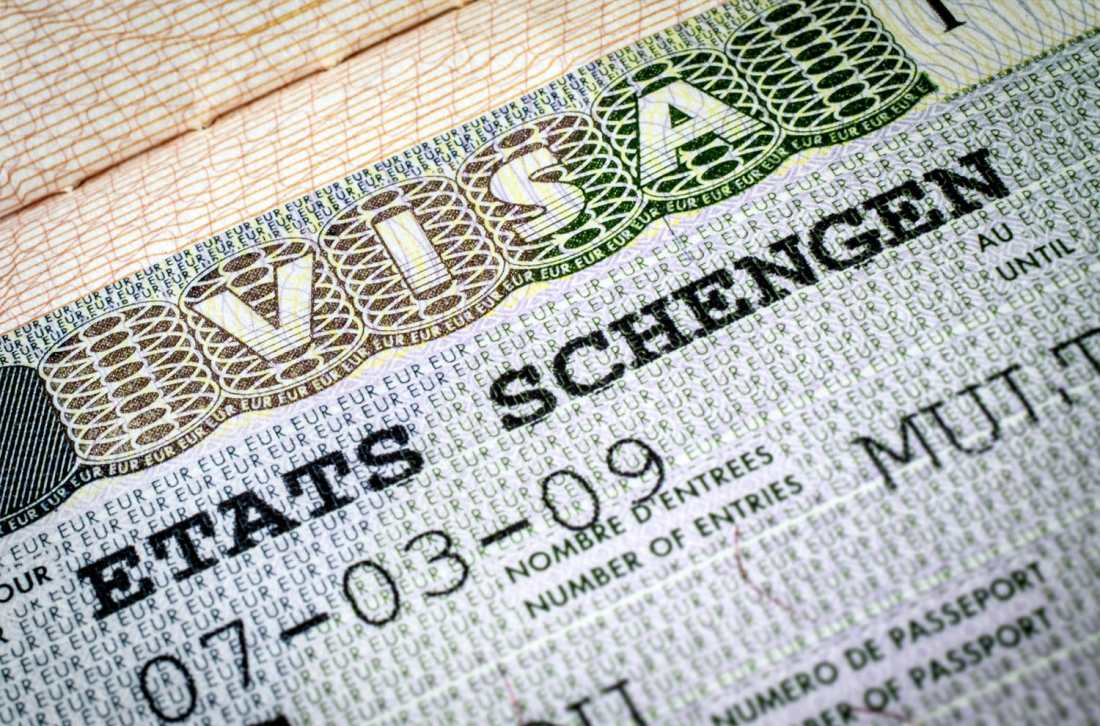
A Schengen Visa is the document issued by the appropriate authorities to the interested party for visiting/travelling to and within the Schengen Area.

The Schengen Area is comprised of 26 countries that have agreed to allow free movement of their citizens within this area as a single country. Of the 26 countries bound by the Schengen agreement, 22 are part of the EU and the other 4 are part of the EFTA.

Schengen area covers the majority of European countries, except for the United Kingdom and countries such as Romania, Bulgaria, Croatia, Cyprus and Ireland soon to be part of the agreement. However, there are countries that are not part of the EU like Norway, Iceland, Switzerland and Lichtenstein yet do belong in the Schengen area and cherish the free movement policy.

Who needs a Schengen visa?

Thecitizens of the non-Schengen member countries are requested a mandatorySchengen Visa in order to enter the Schengen Zone. There are exceptions to this rule, however: for some countries that are not part of the Schengen Agreement yet aren’t required a visa to enter the Schengen zone.

Visa Application Requirements

In order to travel to one or more of the Schengen Zone countries, as aforementioned, one needs to apply for a Schengen visa at the designated embassy/consulate. There are however, certain requirements similar to every embassy/consulate that have to be met in order to pursuit the application. A unified exemplar of the requested documents with the additional information is meticulously described and listed at Schengen Visa Application Requirements section.

Types of Schengen Visa

Regarding the nature/purpose of the travel, there are several types of a Schengen visa issued by the designated embassy/consulate.

•           1. Uniform Schengen Visas (USV):

The Uniform Schengen Visa stands for a permit of one of the Schengen Area Member Countries to transit or reside in the desired territory for a certain period of time up to the maximum of 90 days every six-month period starting from the date of entry. According to the purpose of traveling the Uniform Schengen Visaapplies to all of the three categories, “A”, “B” and “C”.

•           2. Limited territorial validity visas (LTV):

This type of visa obtained allows you to travel only in the Schengen State that has issued the visa or in some other cases, in the certain Schengen States specifically mentioned when applying for the visa. Apart from these Schengen countries, this specific visa is invalid to any other Schengen country not specified prior.

•           3. National Visas

Thenational visa of “D” category is granted to the certain individuals who are tobe studying, working or permanently residing in one of the Schengen countries. The national visa can be of a single entry, granted for the people who are in need of residing in the Schengen country for a certain period of time, or for a sole purpose after which they shall return to their country.

What is Schengen? What exactly is Schengen visa issued for?


Are you at a stage where your dream of the grand European tour is converging towards your plan for a European tour? Undoubtedly, Europe is one of the primary choices for Indians traveling abroad. This place has a perfect blend of history, traditions, and the comforts of modernity.

But before that, you would need a Schengen visa to travel to most countries in Europe.

Schengen:

Schengen refers to the EU passport-free zone that covers most of the European countries. With 26 countries, it is the most extensive free travel pass in the world.

So which countries can you visit with a Schengen visa?

All the 26 countries in the Schengen area (alphabetical order) are as follows: Austria, Belgium, Czech Republic, Denmark, Estonia, Finland, France, Germany, Greece, Hungary, Iceland, Italy, Latvia, Liechtenstein, Lithuania, Luxembourg, Malta, Netherlands, Norway, Poland, Portugal, Slovakia, Slovenia, Spain, Sweden, and Switzerland.

So, if you are planning that Grand Euro trip and your point of entry into the continent happens to be one of the countries mentioned above, you will need a Schengen visa.

What exactly is Schengen visa issued for?

•           Transit through or an intended stay in the territory of the Schengen states for no more than 90 days in a total of 180 days period (short-stay visa).

•           Transit through the international transit areas of airports of the Schengen states (Airport transit visa)

•           Hence it is imperative to know that if you plan to study, work, or live in one of the Schengen countries for more than 90 days, then you will have to apply for a national visa of that European country and not a Schengen Visa.

Things to consider before applying for a visa

The most critical point to keep in mind before applying for a Schengen visa is to check and maintain your account balance. You will be required to be able to provide bank statements of a certain number of months (usually 3) before your visa interview. Once you are confident that you have adequate money to cover the days of the trip, move ahead with the visa application process.

For Indian passport holders who need a tourist visa, the next careful step you need to take is to get your entry and exit tickets, which are refundable since getting a visa is not guaranteed.

In the worst-case scenario where your visa application is rejected, you will have the option of cancelling your tickets and save some hard-earned money that you spent on them.

IS TRAVEL INSURANCE NECESSARY IN EUROPE?


If you need a visa for traveling to the Schengen Area (you can check it out on iVisa), you will need Schengen Visa insurance to apply for it. Take into account that not all countries are required to have a Schengen visa to visit the Schengen area. We will talk about which countries are required and which are not in the following section.

But before jump in, let’s check why even if you don’t need a Schengen Visa, it can still be very helpful to buy Europe travel insurance. Here are a few of our own experiences that show how useful it can be to have travel insurance for Europe:

•           I was studying English in Ireland with my cousin when he had to have emergency surgery for appendicitis. His insurance covered all the costs upfront.

•           My brother was on a study tour in Italy when he came down with gastroenteritis and spent three days in the hospital. His travel insurance for Europe covered the costs of his hospitalization.

•           On a trip to Germany, my suitcase never came. Luckily, my Europe travel insurance covered all my clothes and basics that I needed for the trip.

•           Some years ago, I had a trip to Ukraine planned. For family reasons, I had to cancel it, and since I didn’t have Schengen travel insurance, I lost the money for the flights.

•           My mom’s bag was stolen in a bar in London. She didn’t have travel insurance for Europe and lost her cell phone, wallet (with ID and credit cards inside), and camera.

As you can see from the examples above, all kinds of unexpected things could happen to you while you’re traveling. It’s always better to have the security of travel insurance for Europe rather than to risk learning your lesson the hard way.

WHAT DOCUMENTS DO I NEED TO TRAVEL TO EUROPE?

The answer to this question will largely depend on if you’re traveling to a country that is included in the Schengen Area or not. Keep in mind: not all European countries are part of the Schengen Area. Some European countries are part of the Schengen Area, some are part of the European Union, and some are part of both.

Here’s the difference between Europe, the European Union, and the Schengen Area: Europe is a continent that comprises 50 different countries. Within that continent, different countries have various agreements and accords with each other. The European Union is made up of 28 European countries that have formed a political and economic union. On the other hand, the Schengen Area, which consists of 26 European countries, is a zone where all of the member countries have gotten rid of internal borders. This means that once you’ve entered the Schengen Area, you can move freely from one country to another.

Insurance for the Schengen Visa

When traveling to Europe for 90 days or less within a 180-day period, you will likely be required to get a Schengen visa. This visa will allow you to travel freely between the 26 European countries belonging to the Schengen area without having to go through customs at each border. To qualify for the Schengen visa,you will need to purchase a health insurance plan that meets a strict list ofrequirements, and also produce a letter from your insurance company, stating that each requirement is met.

The Ultimate Guide to Tourist Schengen Visa


Are you sitting at your desk surrounded by tourist brochures to Europe and multiple windows open in your browser on how to apply for a Tourist Schengen Visa? While the prospects of travelling to Europe is definitely thrilling, obtaining a tourist visa, on the other hand, can be a strenuous task, particularly if it’s your first visa ever.

However, with the right guidance, you can also get your Tourist Schengen visa approval quite easily. That’s why this article is a must-read before your visa application!

WHAT IS A TOURIST SCHENGEN VISA?

The Schengen visa was introduced after the Schengen agreement of 1985. The concept behind this was to remove border restrictions and promote free movement across European countries. Currently, there are 26 European countries that are part of this agreement. So, you can make inter-Schengen trips from any of these countries, without requiring multiple visas.

If your sole purpose is travelling and enjoying your vacation, you need to geta tourist Schengen visa for yourself. With a tourist visa, you can visit any place in the Schengen areas well as stay for a maximum period of 3 months. Since the validity of the tourist Schengen visa expires within 90 days, you’ll have to apply again to extend your stay for more than 3 months. Also, if you hold a tourist visa, you’ll not be allowed to work or earn in any Schengen country during your tour. So, if you plan on working as well as travelling, then you may, preferably, get a job visa instead.

CHECKLIST OF TOURIST SCHENGEN VISA REQUIREMENTS

Applying for a tourist Schengen visa is a major task while planning your trip, as you need to fulfil a lot of requirements. Here is a list of all the mandatory requirements you’ll need before applying for a tourist Schengen visa.

1.         Visa application: The most important requirement is the filled visa application form for a tourist Schengen visa. Remember to duly sign the application form as well as provide two passport-sized photos along with the application.

2.         Original Passport: The passport must be valid for at least 3 months after your return journey from the Schengen area. It should also be issued within 10 years at the time you apply for the visa.

3.         Proof of accommodation: You need to provide the hotel reservation documents for the whole duration of your stay in the Schengen country. If you’re planning to stay at any friend’s or relative’s place, you must supplement your claim by providing an invitation letter or sponsorship proof from the host residing in the Schengen area.

4.         Return flight ticketsYou need to provide a proof of your round-trip to theSchengen area. If you aren’t sure of the return dates, you can get a flight itinerary from your Travel agency, instead of booking the ticket. Remember that the itinerary should contain information about your flight numbers and dates.

5.         Travel medical insurance: You can never predict what challenges you may encounter during your trip. So, it is important to ensure the foreign embassy of the country you’re visiting, that you have enough financial aids to handle any emergencies like accidents or illness during your trip. Here, you need to provide details of your Travel Insurance, which has a coverage of at least 30,000EUR and validity in all the Schengen countries.

6.         Personal Covering letter: You have to provide a summary of your tour plan, including all the details such as the places you plan to visit, other Schengen countries you intend to travel, your mode of transportation in the Schengen area, and inter-Schengen flight/train tickets.

Apart from these basic documents, there are certain additional documents that will assist you in the application process. The documents like the proof of your financial subsistence, birth certificate, a marriage certificate if you’re married, ration card, and a no objection letter from your higher officials should be sufficient as the supporting document. Collecting each of these documents and attaching it to your visa application helps the embassy to ensure that you are trustworthy enough to visit their country. Remember to duly sign all the required documents and recheck for any missing information.

HOW TO BOOK A ROUND TRIP RESERVATION FOR SCHENGEN VISA APPLICATION

One of the most important things to have for a Schengen Visa application is having a round trip reservation. Get it right, then you might have a bigger chance to get the visa you want. To do so, you must prepare everything completely. The consulate of the particular Schengen country or Embassy willask you for details of a booked flight reservation. Providing a flight itinerary for your journey to Europe is a must. So, how to book a round trip reservation for Visa Application? The followings are the comprehensive explanation:

THE STEPS OF BOOKING A ROUND TRIP RESERVATION FOR VISA APPLICATION

1. First, visit website https://www.schengenvisaitinerary.com/

This is the official website of Visa Reservation online. You do not need to go to anywhere anymore.

2. Then, choose the best package of travel for you

 Do you know how to pick the best package for your travelling? Here, we give you a little advice:

·         Choose the Correct Destination

Although, narrowing a couple of nations down to one can be a test such as the Schengen Countries. Do not forget to consider the climate and the season of your destination for sure. For instance, while pre-fall is a heavenly season to visit most destinations, you may need to hold up until some other period of time in the year to visit Holland. Other example is when you want to visit Venice, beware of a high-water and low-water seasons. Because it often gets flooded in rainy season. Whenever is your destination, you may need to put in genuinely more work than pick randomly place to visit.

·          Package That Visit Place of Your Delight

Do you get sick when on a vessel on bumpy waters? Do you like nature that incorporate a huge amount of wild nature? Is there an explicit piece of a goal’s lifestyle you find awesome and anti-mainstream? These are the sorts of request you’ll have to answer when settling on a visit. Pick travel that considers your interests, rather than one develop essentially in light of expense or something else. If you find that your destination is not accommodating your interests, then you can do a deeper research about another European package tour!

3. Send Your Flight Details and Proceed the Payment

After choosing the appropriate package of your round-trip reservation, you have to move to the next step, which is sending your flight details and proceed the payment. The payment will confirm the booking of your flight package.

4. Receive the Details of Your Package Flight Reservation Via Email

This is the last step to approve your booking of a visa application user round trip reservation.

The moment you have a Flight Ticket, you have in your grip the ticket with, which you can take off to your objective. By all means, people who do not know about the step of how to book a Round Trip reservation for Schengenvisa application, they can risk losing their money on an excessive flight ticket without truly taking off to their planned destination. That is why you must be absolutely thorough about it.

SHOULD YOU BOOK A FLIGHT OR HOTEL BEFORE VISA APPLICATION?

Probably not! Purchasing flight tickets and booking accommodation is equivalent to a commitment to traveling on the dates you booked for. If your visa takes longer than expected to get processed, what do you do with the confirmed flight tickets and hotel booking? A full refund of the price is extremely rare, and you end up losing thousands of dollars for no good. Instead of going through all this hassle, how about opting for a flight reservation for visa and a hotel reservation for visa application that not only offers you more convenience and flexibility, but also ensure that your purpose is served.

Visa rejection rates can be high for certain countries. Hence, most embassies accept a flight itinerary or reservation document as proof of travel on the specified dates. However, do keep in mind that if you are reserving a flight itinerary for your visa application and not actually buying a ticket, it makes good sense to disclose that to the embassy upfront. The flight reservation document helps the embassy to validate what you have mentioned in your application form. So, in such cases, honesty is always the best policy. You don’t want to get rejected for forging documents or providing false information.

WHERE TO APPLY FOR THE VISA?

If your trip includes more than one Schengen country, it is the consulate, diplomatic office or the embassy of the first country of your visit where you are required to apply. Once you’ve collected all the necessary documents for your tourist Schengen visa, you can enclose them in an envelope with your address and contact phone number on the top.

We recommend submitting the visa application and the additional documents when you appear for the interview at the consulate or embassy. You can even choose to send the documents to the nearest diplomatic office via post.

We certainly understand that the stress associated with applying for the Tourist Schengen visa can be tremendous, as you don’t have a clue of whether you’ll get your visa on time or not, even after providing a copious amount of proofs and documents at the embassy, and making flight and hotel reservations up front. That is why, you can have the expert guidance from our friendly support crew through each step of your visa application, such as getting a Travel Insurance or getting a dummy flight reservation or hotel reservation for visa! All you need to do is, simply contact us and let us know your requirements.

7 things Indians need to know before traveling to the Schengen zone

There are several things that every Indian traveler must know before taking a flight to any of the Schengen countries. You may have friends and relatives who have previously traveled to Europe, but taking tips from professionals is always better than receiving advice from the first. You never know what they missed, that would cause troubles for you.

The main things that you should know after you purchase Schengen Insurance from India, are as follows:

1.         Indian nationals need visas to enter the Schengen zone. Of course, you may be exempt in several occasions, but in general, most Indians need a visa to enter the Schengen territory.

2.         Make sure you have the entry documents with you. When you show up at the Schengen port of entry, just presenting your Indian passport with the visa sticker on it, may not be enough. Schengen countries have different entry requirements, so you should check with the embassy before you start your trip. This could be proof of travel insurance, travel itinerary and accommodation, as well as means of subsistence.

3.         The Euro is not every Schengen country’s currency. Many Indians seem to be confused by that; however, you should have it clear that the Euro is not the currency of every country in the Schengen Area nor the European Union. Many of them still haven’t adopted the Euro, and use other currencies.

4.        The Indians cannot travel to the UK with a Schengen Visa. This is a very important thing to know! Just because the UK is (still) in the EU, that does not mean that you can travel there with a Schengen visa, since the UK is not part of the Schengen agreement.

5.         Make reservations in advance. If you intend to visit the most famous tourist spots in Europe, you should make reservations in advance, as it is super hard to find tickets upon arrival. Many other tourists will also be there trying to get a ticket, waiting in long lines, and you do not want to waste your time doing so.

6.         Have a map – or a map app. Just wandering and asking random people on the street where one particular spot is, is not a clever idea. You want to use your time in the best way possible, so take a map, and plan in advance.

7.         Take the right power plugs with you, as sockets in Europe are different. The Europlug is a flat, two-pole, round-pin domestic AC power plug, rated for voltages up to 250 V and currents up to 2.5 A. Whereas, in India the power plugs and sockets are of type C, D and M. The standard voltage is 230 V and the standard frequency is 50 Hz.

For more information, Please visit : https://www.schengenvisaitinerary.com/

About Schengen Rules for Tourist Visa and Rules for Business Visa

The Eiffel Tower in France, the Colosseum In Rome, the Alps in Switzerland and more such enticing travel destinations are scattered all over Europe. Planning a single trip to different countries in Europe, leaves travellers with a fundamental question, “Do multiple countries, mean multiple Visas? “. Travelers can sit back and relax, as they do not have to manage multiples Visas, but just one Schengen Visa that covers most of the travel destinationsin Europe.

The Schengen Visa grants free movement across the 26 European countries under the Schengen area. (European countries that currently hold a place in Schengen: Wikipedia). These countries do not perform any border control checks such as immigration/passport verification when travellers’ cross internal boundaries. A treaty to abolish internal borders in Europe was signed and passed in 1985 in the town of Schengen, Luxembourg.  And that’s how the Schengen Visa got named!

Even if Schengen Visa is a single Visa that grants privilege to enter and move in the Visa-Free Zone, it has to be applied with one of the Schengen countries. Here comes the trickiest question on Schengen Visa, with the most contradicting answers on the Internet: With travel planned across multiple countries, which country should one apply for a Schengen Visa?

Schengen Rules for Tourist Visa

Rule 1: Apply for your visa from the country where you are staying for thegreatest number of nights. (As hotels stays are measured in nights, it is easy to count your length of stay in terms of nights)

Rule 2: After applying rule 1, in case of a tie between two or more countries with respect to the length of stay, apply for your visa from the country in which you are entering first (out of the countries which have a tie due to the same length of stay)

For instance. If you plan to stay in France and Spain each for 5 days, but amongst those, France is the first country you decide to visit first, apply for your visa at the France Embassy.

Schengen Rule for Business Visa

Rule 3: If you plan to explore neighbouring countries in addition to your business trip, then your period of stay does not matter. Apply for your visa from the country which you are visiting for business purpose. 

Our previous blog on ‘Schengen Visa Rejection Letter – Explained’ throws light on possible reasons for rejection of Schengen Visa. Schengen visa application is oneof the stringent visa processes. This makes it a visa with higher rejection chances.  Travelers should recognize this fact, understand the reasons for rejection and then proceed for visa application, thereby avoiding losses due to visa rejection.

The earliest time to apply for a Business visa is three months before your planned trip and the latest is at most 15 working days before you intend to travel to Europe for business purposes. The best time to apply for a Business Schengen visa is at least three weeks before your business trip to Europe.

How to Get a Dummy Ticket for a Schengen Visa Application?


You can obtain a dummy ticket for a Schengen visa application directly with any of the airlines that offer this service. However, not many airlines offer this service which means you will have to pay for a return flight up front. If you find an airline which is happy to issue a dummy ticket, most specify that the document is only valid for 24-48 hours. Schengen visa applications take anything from 7 – 14 days to be processed, so this small time period in which the dummy ticket is valid is just not practical.

A better alternative is to use a verified travel agent like Schengen Visa Itinerary who provide this service, specifically for Schengen visa applicants. Schengen Visa Reservation can help you book a dummy ticket for a Schengen visa which can later be converted into a confirmed ticket or cancelled if your visa application gets rejected. This will potentially save you thousands of dollars on your air ticket, since dummy tickets booked through our website are valid for at least 2-3 weeks.

To assist you through this process smoothly, our team at Visa Reservation has created several packages to suit the needs of different kinds of travelers. These packages not only include flight reservation for visa, but other required documents too, such as Hotel Booking for Visa Application, Travel Insurance for Visa Application. These packages are suitable for travelers looking for any of the above-mentioned flight itinerary types. So, whether you are planning to visit a single country or multiple countries in the Schengen area, we can take care of all your flight reservation needs. In addition, if you are planning on visiting more than one country, there is no need to create separate flight itineraries, for a nominal fee we can put together a suitable package which covers every little detail of your trip.

With regard to flight itinerary for visa, Visa Reservation, offers three kinds of flight itinerary reservation options for you to choose from:

1.         Normal delivery – receive a customized flight itinerary within 24 hours

2.         Priority delivery – receive a customized flight itinerary within 6 hours

3.         Rush delivery – receive a customized flight itinerary within 1 hour. You can speak with the support representatives on how to get this done

Simply pick a delivery option and we will get the job done for you quickly and efficiently. Let us do all the hard work, so you can enjoy the countdown to your trip!

If you’re planning to obtain your flight reservation for your Schengen visa without paying for the ticket, all you have to do is follow the 3 simple steps below:

1.         Visit the Schengen Visa Itinerary website to choose the right package

2.         Submit the travel details and make the payment online

3.         Receive flight itinerary by email