
What are the Types of Flight Itinerary for Schengen Visa Application?

In layman term, “It is a verifiable document issued by an airline, travel agency or an online service provider to confirm that visa applicant has booked/paid for a flight seat on an aircraft.”

Technically speaking, “A Flight Itinerary for visa application is the proposed route of an airline information such as flight name, departure/arrival timings along with dates, flight code, departure/arrival airport IATA codes (Ex: FRA is IATA code for Germany’s Frankfurt International Airport, BLR for India’s Kempegowda International Airport and LCY for Britain’s London City Airport) and flight reservation/booking numbers.”

Flight Itinerary is further classified into two categories:

•        One-way or Open Flight Itinerary

•        Roundtrip Flight Itinerary

One-way or Open Flight Itinerary

A One-way or Open Flight Itinerary contains details of the applicant’s entrance into the host nation. It does not mention the date of departure.

In the expert’s opinion, the aforesaid itinerary is not the right choice for a visa application. As it stirs suspicions—in the minds of the staffers at the diplomatic offices—that the applicant might overstay in the country or extend his stay illegally. Thus, a one-way Flight Itinerary leaves a negative impression on the minds of the staffers at the corresponding embassy or consulate that the applicant has no intention whatsoever to return back to his/her home country.

Roundtrip Flight Itinerary

It illustrates the dates of both your arrival in and departure from the host nation. The aforesaid itinerary gives satisfaction to staffers at the embassy or consulate that applicant does not have intentions to extend his/her stay in the host nation and will leave the country as soon as possible, once his/her visit is completed.

It also helps visa officials to determine the number of days that the applicant will spend in the host nation. They arrive on aforesaid conclusion on the basis of applicant’s arrival and departure dates mentioned on the roundtrip flight itinerary. In simple words, a roundtrip flight itinerary helps visa officials in determining the duration and validity of the visa.

Besides, the document also helps visa officials to determine whether the applicant has arrived at the accurate embassy or not.

Let us explain it to you with a simple example of the Schengen Area.

A Schengen Visa allows its holder to visit as many as 26 countries. Now the question emanates that if the applicant wants to travel to more than one Schengen Country, in which embassy he/she should apply?

In that scenario, the applicant will apply to that embassy or consulate of the country where he/she is planning to spend his/her time most. Such a country is often dubbed as or refer to by ‘main destination’.

However, if the applicant intends to stay in all countries for the same duration, then he/she will apply at the embassy or consulate of the country which he/she is planning to enter first.

For more information, please visit: https://www.schengenvisaitinerary.com/
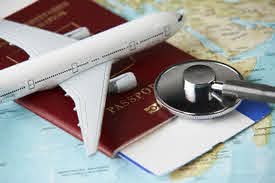
What does the Schengen Visa Travel Insurance Cover?

The details of travel insurance can differ between insurers, and you should always check the policy wording before you buy your policy to be certain of what you’re covered for. In general, most travel insurance covers:

•        Possessions: When items such as your luggage, important document, or cash up to a certain amount are lost or stolen

•        Medical treatment: Insurers generally include cover for emergency medical treatment, though if you haven’t declared any pre-existing medical conditions, treatment for that condition likely won’t be covered

•        Holiday disruptions: Reimbursement for disruptions to your travel or living arrangements, such as involuntary abandonment or missed departures, delayed flights, cancelled flights or accommodation, or a curtailed trip

•        Legal costs: For if you have to pay legal fees for an incident that wasn’t your fault. If you have to pay personal liability if an incident was your fault, your insurer may also pick up the cost

There are also some common things that most travel insurance policies won’t cover, so be sure to check the policy documents. In these cases, it’s often possible to buy extra cover for an additional price.

Typical things that may not be covered as standard by travel insurance include:

•        Adventurous activities: Winter sports or other potentially hazardous activities like climbing, shark cage diving and white-water rafting may not be automatically insured, but you may be able to take out extra cover

•        Expensive items: Gadgets, designer clothes or sports and music equipment are often excluded from standard travel policies. If you’re taking your laptop, fancy sunglasses or a guitar with you, check if you’ll need additional cover as some insurers will have a maximum price limit for individual items that you can claim for

Labour-induced injuries: If you injure yourself working a temporary job while you’re backpacking, for example, you may not be covered

For more information, please visit: https://www.schengenvisaitinerary.com/

Are there any other benefits that are included in the travel insurance?

Yes, aside from the above-mentioned mandatory coverage of your Schengen travel insurance, many companies also include other benefits to make the purchase more attractive and more worth the price. Here are some additional benefits that may come with your travel insurance for Schengen visa:

       Lost and/or stolen luggage

       Broken luggage

       Damaged personal property or travel documents

       Delayed luggage due to airline error

       Delayed or cancelled flight due to weather

       Accidental death or injury

       Injury or death due to acts of terrorism, and

       Pre-existing disease

In the Schengen Visa Itinerary also, we have the best Travel Insurance, Flight Itinerary and Hotel Booking services are there.

Why are Schengen visa applicants required to get travel insurance?

Apart from the law that states that all USV applicants must have travel insurance, the main reason why the organization wants to require travel insurance is to protect both the governments under the Schengen organization and the travellers who are within the region.

Imagine if you are travelling on a tight budget and you get sick or lose your wallet or your luggage, you do not have any buffer or safety net to protect you and save you from a big expense. In effect, the $80-$100 travel insurance may just save you from thousands of euros expense should you get sick, lose items, or worse meet an accident. The travel insurance is an investment that you need when you are travelling.

Proof of Accommodation for Visa Application

In the list of supporting documents for Schengen Visa Application is a Proof of Accommodation as well as Flight Reservation. The diplomatic office of the relevant Schengen country has to see if you have an agreed or prearranged place to stay for the duration of your visit in the destined country.

The Embassy/Consulate does that through the following recognized forms:

•        An Evidence of a Place to Stay, such as Hotel Booking or Reservation,

•        An Invitation from The Host with a Copy of His Passport (proof of sponsorship),

•        An evidence of a pre-paid tour with details of your payment to the tour operator

Arisen by the Regulation (EC) No 810/2009 of The European Parliament And of The Council of 13 July 2009, establishing a Community Code on Visas known as “Visa Code”, Proof of Accommodation is a rule of the visa application procedure that each Schengen country ought to apply to their foreign visa seekers.

As such, in the Article 14 (1) the “Visa Code” stipulates the following:

“When applying for a uniform visa, the applicant shall present:

•        Documents indicating the purpose of the journey;

•        Documents in relation to accommodation, or proof of sufficient means to cover his accommodation;”

While in the 4th section of the same article the “Visa Code” specifies:

“Member States may require applicants to present a proof of sponsorship and/or private accommodation by completing a form drawn up by each Member State. That form shall indicate in particular:

•        Whether its purpose is proof of sponsorship and/or of accommodation;

•        Whether the host is an individual, a company or an organisation;

•        The host’s identity and contact details;

•        The invited applicant(s);

•        The address of the accommodation;”

On the other hand, the Article 21(5) about verification of entry conditions and risk assessment, requires: “The means of subsistence for the intended stay shall be assessed in accordance with the duration and the purpose of the stay and by reference to average prices in the Member State(s) concerned for board and lodging in budget accommodation, multiplied by the number of days stayed, on the basis of the reference amounts set by the Member States in accordance with Article 34(1)(c) of the Schengen Borders Code. Proof of sponsorship and/or private accommodation may also constitute evidence of sufficient means of subsistence.”

Difference between Dummy Flight Reservation and Actual Flight Ticket

What is Flight Ticket?

A Flight Ticket is an airline ticket purchased by the applicant from a travel agent or an airline company. It can either be an electronic document or paper-printed document.

An actual flight ticket clearly illustrates that the itinerant has a reserved seat on an airplane for departing to the host nation.

However, all embassies and consulates recommend visa applicants not to buy an actual flight ticket before the verdict on their application is announced.

We also recommend you to buy a roundtrip flight itinerary instead of an actual flight ticket for the visa application. As in the case of the visa denial, the applicant can lose his/her hard-earned money spent on an actual flight ticket.

However, there are certain embassies and consulates which may demand an actual flight ticket along with the visa application (if the need be). They do so to make sure that the applicant actually wants to visit (Schengen Visa Itinerary) the specific destination.

Difference between Dummy Flight Reservation and Actual Flight Ticket

As discussed above, an actual flight ticket entitles its holder to travel from the home destination to the host destination. On the other hand, a flight itinerary or dummy air ticket

is merely the proposed route of the applicant’s travel. The latter is a detailed travel document whereas the former is an actual ticket detailing only your arrival and departure dates.

Besides, a dummy ticket or flight itinerary cost a trivial amount of money whereas an actual flight ticket costs a hefty amount, even ranging to 1000 USD in some case.

What factors you need to consider when buying travel insurance

You have to fulfil all the requirements of Schengen visa travel insurance to get your visa approved. Your Schengen travel insurance should fulfil all the following requirements:

•        EUR 30,000 minimum coverage

•        zero-deductible insurance

•        Insurance should cover all the Schengen countries.

•        It should cover the duration of your entire trip in Schengen countries

•        Provide 1page Schengen visa insurance letter

These factors will depend on the visa that you are applying for, but this is usually the standard requirements (as well as Flight Itinerary) for a Schengen visa application.

What is travel insurance?

Travel insurance or travel medical insurance is a policy that you purchase prior to traveling that, in the unlikely event of you landing in the hospital or at the doctors, your fees will be covered by your travel insurance policy or travel medical insurance. Rather than you having to pay the bill, the company in which you bought your policy through, pays it. Depending on the type of policy you purchase you could be covered for more than just medical fees. Most travel medical insurance policies also cover a selection of travel disruptions as well as medical needs, the following are the likely areas that a visitor’s insurance policy would cover you for

•        Airline cancellation

•        Lost baggage

•        Flight cancellation due to weather

•        Accidental death/injury

•        Stolen travel documents

•        Hospital fees

•        Medicine costs

•        Emergency Evacuation

For more information, please visit: https://www.schengenvisaitinerary.com/

WHY DO YOU NEED A FLIGHT ITINERARY FOR A VISA?

Flight Reservation for Visa Application

If you’re planning a trip, one of the first things you need to do is to start with the visa application. But to do that, you will be asked to present a flight reservation? Have you been wondering what that means? In most cases, embassies will ask you to show a return flight ticket to your home country to ensure that you will be going back to your home country and not intending to overstay in the destination country. However, paying for a ticket is an expensive commitment to make. Especially when you are not sure how long your visa application will take or whether your visa application will be accepted. A valid flight reservation itinerary for a visa application can be of great help to you in this situation!

WHAT DOES A FLIGHT ITINERARY FOR A VISA MEAN?

A flight reservation for a visa application refers to a reserved itinerary or a flight plan to and from the destination country you are making the visa application for. This itinerary is not an actual flight ticket, and thus, doesn’t need to be paid for, except for the minimal service or processing charges to the travel agency. Once your visa is issued, you can make your travel plans and purchase your ticket or book your hotel with your preferred method.

WHY DO YOU NEED A FLIGHT ITINERARY FOR A VISA?

What happens if you bought a flight ticket while applying for a visa, and your visa application is rejected? You’ll then have to cancel your ticket if it is refundable, or you might lose your money if the ticket is non-refundable. But don’t worry, there is a way for you to get a flight itinerary without the risk of losing your purchased ticket due to a visa rejection. Instead of purchasing a flight ticket, consider buying a flight itinerary for a visa application, which will give you the flexibility to pay for a flight ticket once your visa is approved. Given how uncertain visa regulations have become these days, a flight itinerary for a visa application basically helps you avoid the risk of buying an actual ticket without a confirmed visa.

Flight reservation itineraries look similar to a real flight ticket, except they do not have price details on them. They come with a unique reservation ID or code. They also contain all the other information that you would typically have on an actual flight ticket – point of boarding, point of entry, travel dates, etc. All this information is mandatory when applying for a visa, so the embassy is assured of your travel plans.

What is Flight Itinerary and Hotel Booking for Schengen Visa?

Visa applicants are required to present flight itinerary and hotel booking when submitting the visa application. A lot of visa applicants do not fully understand the whole process so, that is why we’ve decided to explain all the details you need to know about flight itinerary and hotel booking.

What Is a Flight Itinerary for Visa Application?

A Flight itinerary is a document which you submit with your visa application. That document shows all the details of your flight and it should contain the following information:

– date and time of departure and arrival

– flight name

– valid flight reservation number

– details of connecting flights

What Is a Flight Booking?

A flight booking is a simple reservation which you can make through an airline company of your choice. In other words, you don’t have to purchase the ticket before the visa is issued. If you don’t want to book your Flight Reservation by yourself, a travel agent can book a flight reservation for you. You only need to pay a small fee, but it’s worth it in the end.

What Is a Hotel Reservation?

A hotel reservation is one of the requirements for applying for a Schengen visa and a valid proof of accommodation requested by the Embassy. Also, a proof of accommodation shows the evidence of your residence in the country you are planning to visit. As a proof of Hotel Reservation, the Embassy will be looking for the following information:

– your full name

– your entry and exit dates

– hotel address

– hotel contact details (phone number, email, etc)

– a valid hotel reservation code

* A hotel reservation confirmation letter is issued directly by the hotel. You don’t have to write it yourself.

Note: It’s not recommended that visa applicants buy tickets unless their visa is granted. Also, do not submit fake hotel and flight reservations. If you submit fake documents, you risk being denied.

Roundtrip Flight Itinerary for Schengen Visa

A roundtrip flight is a flight itinerary that includes one flight to a destination and another flight back from that destination, such as flying from NYC to Paris and then Paris back to NYC. The route may include layovers or connections, but the start and endpoint are the same.

Roundtrip Flight Itinerary

It illustrates the dates of both your arrival in and departure from the host nation. The aforesaid itinerary gives satisfaction to staffers at the embassy or consulate that applicant does not have intentions to extend his/her stay in the host nation and will leave the country as soon as possible, once his/her visit is completed.

It also helps visa officials to determine the number of days that the applicant will spend in the host nation. They arrive on aforesaid conclusion on the basis of applicant’s arrival and departure dates mentioned on the roundtrip flight itinerary. In simple words, a roundtrip flight itinerary helps visa officials in determining the duration and validity of the visa.

Besides, the document also helps visa officials to determine whether the applicant has arrived at the accurate embassy or not.

Let us explain it to you with a simple example of the Schengen Area.

A Schengen Visa allows its holder to visit as many as 26 countries. Now the question emanates that if the applicant wants to travel to more than one Schengen Country, in which embassy he/she should apply?

In that scenario, the applicant will apply to that embassy or consulate of the country where he/she is planning to spend his/her time most. Such a country is often dubbed as or refer to by ‘main destination’.

However, if the applicant intends to stay in all countries for the same duration, then he/she will apply at the embassy or consulate of the country which he/she is planning to enter first.

For more information, please visit: https://www.schengenvisaitinerary.com/

Why Schengen Travel Insurance is compulsory for your Schengen trip

While gathering documents for your Schengen visa application in Nigeria, you discover something. You must submit a Schengen travel insurance certificate to the Schengen embassy. You make arrangements for a travel insurance certificate and, hopefully, you get one. But how much do you know about Schengen Travel Insurance?

It is a popular knowledge that Schengen Travel Insurance is a must for Schengen visa in Nigeria. You must present an original copy of the certificate for verification. This insurance policy has to cater for the costs that accrue from accidents or emergencies when travelling. It cushions the effects of travel mishaps.

Apart from these basic nuggets of information, there is more to Schengen Travel Insurance for Schengen visa. Unfortunately, you may be ignorant about these vital details, which may ruin your chances of getting your Schengen visa approved; which is why you need to read this post to avoid making mistakes.

In the first instance, it’s compulsory for you to get a Schengen travel insurance cover when applying for a visa to any of the 26 Schengen countries.

 You cannot travel to a Schengen state if you don’t have a medical insurance cover. Now, this does not refer to your personal, local health insurance. As most will not be applicable to your journey overseas. It is a special type recognised by the Ministry of Foreign Affairs of the Schengen member states.

Therefore, Schengen embassies will deny your Schengen visa if you use a substandard insurance cover. Moreover, you enjoy all that the insurance policy has to offer, including free medical treatment while abroad.

In the Schengen Visa Itinerary, we have best Travel insurance policy is there.  And we have also Flight Itinerary and Hotel reservation will be there.

For more information, please visit: https://www.schengenvisaitinerary.com/