What are the basics about the Schengen Area and Where to apply for a Schengen visa in India?

Indians are now travelling more than ever. Europe is undoubtedly the first choice for many from India. Ask any avid traveler from India, they would have a bucket list filled with places to see in Europe. If you see by the data, the number of people travelling to Europe from India has doubled since 2014. So how do you travel to Europe? Of course, Indian passport holders are required to obtain Visas from the respective embassies. But there’s a convenient setup among 26 European countries who form the Schengen area of Europe. It is enough for Indian Passport holders to obtain a Schengen Visa to visit all these nations.

Basics about the Schengen area

According to a border agreement named Schengen Area Agreement, 26 European countries allow EU citizens to travel freely within the area. And for Non-EU citizens, with proper Schengen Visa, they are allowed to travel freely within the Schengen area for a limited period of 90 days within six months of issue of the Visa. Non-EU citizens with a Schengen Visa can have multiple entries up to the 90 days period out of the 180 days Visa period.

With proper documentation, you can obtain Schengen Visa from India from the embassy of the country which is your entry point to the Europe trip. Alternatively, you can obtain Schengen Visa from India from the embassy of the country where you will spend the maximum days of your Europe trip. Make sure to choose the right type of Visa as per your purpose of travel.

From the magical streets of France to the stunning landscapes of Switzerland, there’s so much magic within the list of Schengen countries. Here’s the list of 26 countries under Schengen Area.

Trivia: Schengen is the name of a village in Luxembourg bordering with both France and Germany. As the historic agreement was first signed at the village, the agreement was named after the village.

Where to apply for a Schengen visa in India?

•           As mentioned in the basics about the Schengen area, you will have to choose a country in the Schengen area to apply for a Schengen area.

•           According to the rules, if you are visiting one country alone, you will have to apply to that particular country’s embassy. If you are visiting more than one country, choose either the first country you enter or the country you are going to spend the most days in.

•           After you have chosen a Schengen country to apply, visit Embassy World Wide to find a list of embassies and consulates of the respective country in India. So, make sure you choose the right embassy/consulate/VAC of the country and double-check if you fall under the jurisdiction of it.

•           Next step is to visit the website of the embassy/consulate you have chosen and download the Visa application form.

•           Next, you will have to submit the filled Visa application form to the chosen embassy/consulate/VAC.

•           Check with the website to know where visa submission takes place, as the visa submission process regulations differ with each country. It can be its embassy, consulate or outsourced visa center acting as visa submission point.


Complete Guide about the Types of Schengen Visa

First of all, it is essential to choose the type of Schengen Visa based on your purpose of travel. Make a note that there are different limitations that apply to a particular Visa type. Let me break down the types of Schengen Visas available for your travel from India to Europe.

1. Uniform Schengen Visas (USV)

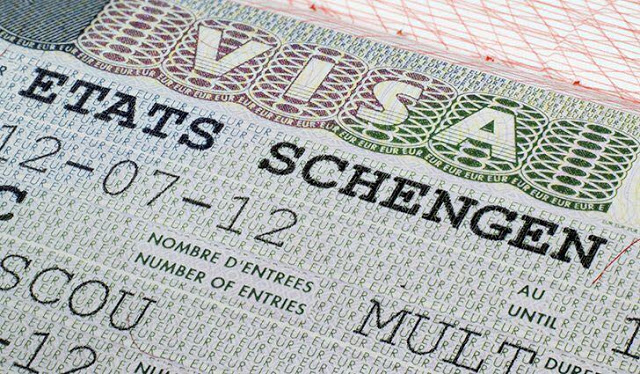
This Visa obtained from one of the Schengen countries can be used to travel any Schengen area for a maximum of 90 days within 6 months of visa issue. This visa can be obtained in the form of a single entry, double-entry or multiple-entry as per the purpose of travel. Single-entry allows the visa holder to enter the Schengen area only once, while the double-entry visa holder can enter the Schengen area twice within 6 months of issue. Multiple-entry visa allows the visa holder to enter and exit the Schengen area multiple times as long as he adheres to the 90/180 rule. The multiple-entry visa can be applied for 1-year, 3-year or 5-year period with the necessary documentation. But even with longer visa durations, you have to follow the 90/ 180 rule (i.e.) one cannot stay for more than 90 days within 180 days of the visa period.

Note: the number of entries is how many times you can enter the Schengen area as a whole and does not denote the number of countries you are allowed to enter.

2. Limited territorial validity visas (LTV)

This visa allows the holder to visit only the country which has issued the visa or countries which are specifically mentioned in the visa. The visa holder cannot enter the countries in the Schengen area that are not mentioned prior in the visa. This type of visa bars the holder from entering any Schengen state and is a special type of visa issued for peculiar cases.

3. National Visas

This visa is given to students or professionals willing to study or work residing in one of the Schengen countries. This visa is issued in the form of both single-entry and multiple-entry. With multiple-entry National visa, one can enter and exit the particular Schengen country as he/she pleases and also can travel within the Schengen area freely. But this visa is only given to people meeting certain criteria and purpose of travel.

Quick tip: Though the number of entries and time permitted are stamped in the visa, it’s the best to have a clear calculation of how many days you spend in the Schengen area. Because a violation of 90/180 rule leads to deportation and fine, depending on the country you are in.

Based on the purpose of travel, types of visas are divided as follows, make sure you mention clearly the type of visa you need in the application form,

1.         Transit visa: this visa is for people who need to travel through the Schengen country airport without entering the country.

2.         Tourism visa: this visa is for people who travel to the Schengen countries for exploring the place and culture, and spending a holiday there.

3.         Visa for Visiting Family or Friends: this visa is for people who are travelling to Schengen countries to visit their family or friends who legally reside there. You will need a letter of invitation and some additional documents for this type of visa.

4.         Business visa: this visa is for people who travel for business purposes. It has a benefit as even during peak seasons business visas get quicker visa appointments.

5.         Visa for Culture and Sports activities or Film crews: This visa is for people who travel to participate in any form of cultural or sports events in the Schengen countries. People belonging to a film crew who has planned a shoot in the Schengen countries can also avail this type of visa.

6.         Visa for Official Visits: This visa is for people who are travelling on fulfilling an official duty from his country.

7.         Study visa: This visa is for students who are willing to take up educational courses in Schengen countries.

8.         Visa for Medical Reasons: This visa is for people visiting any of the Schengen visa countries for medical treatment.

Flight booking and travel itinerary for a Schengen visa; why are they required?

Introduction

A flight booking and travel itinerary are key documentary requirements for a Schengen visa. In this article, we discuss the relevance of these documents in an application for a Schengen visa. Depending on the purpose of your visit, your visa may be refused if you fail to submit either of these documents.

What is a Travel Itinerary?

An itinerary is simply a document that details your travel plans. It usually provides details of hotel bookings, flight arrangements, and daily activities or schedules for the duration of your stay. An itinerary is only required for journeys undertaken for tourism or private purposes. It must usually specify the places you intend to visit by way of schedule of activities.

Article 14(1)(a) of the Visa Code states an applicant for a Schengen visa shall present documents indicating the purpose of the journey. Further, Annex II(A) (3) (b) of the Code states that for journeys undertaken for tourism or personal reasons, the applicant must submit documentation relating to their itinerary.

The Visa Code describes itinerary to include “confirmation of the booking of an organized trip or any other appropriate document indicating the envisaged travel plans.”

Bookings on organized trip or tour guides and tickets for entry into tourist sites could be submitted as evidence of itinerary.

A key requirement of an itinerary is that it must be plausible. The schedule of activities must be arranged in a manner as to make your plans credible. For example, it may be more reasonable to visit tourist sites that are in close proximity to one another on a particular day, rather than a disjointed schedule of visits that are miles apart from each another and lacks coherence. If your itinerary is implausible or disjointed, this may raise doubts about the credibility of the purpose of your visit and may cause your visa to be refused.

Another requirement is that the duration of the itinerary must be consistent with your travel dates. Specifically, it must be consistent with the travel dates as shown on the visa application form, flight booking, hotel reservation, and travel medical insurance. If your itinerary shows discrepancies with travel dates shown on other documentation, your visa may be refused.

What is a Flight Booking?

A flight booking is a document that shows that you have booked a place on an airline to travel at a future date. It specifies your departure and return dates, and any connecting flights, if applicable. You must submit a flight booking regardless of the purpose of the visit. You can make a flight reservation either by yourself or through an agent.

Article 14(d) of the Visa Code states that an applicant shall present information enabling an assessment of their intention to leave the territory of the Member States before the expiry of the visa. And Annex II B (1) of the Visa Code lists “reservation of or return or round ticket” as one of the documentations that may be submitted in proof of intention to return. A flight booking is, therefore, a key documentary requirement for a Schengen visa. You must consider this information when making a flight reservation either by yourself or through an agent:

• The document must specify your name;

• It must clearly show your arrival and departure dates and times;

• It must show the flight name and a valid reservation number;

• It must show details of any connecting flights;

• It is must show a return reservation. A one-way reservation will not meet the requirement.

• Your travel dates must be consistent with the dates on your visa application form or other supporting document. If there are discrepancies, this may lead to a refusal;

• Do not buy a ticket unless the Embassy specifically requests you to do so.

Conclusion

A Schengen visa is generally a documentary application. However, it is not sufficient to provide documentation merely because they are required. Keeping these details in mind may save you time and unnecessary expense that may result from a refusal.

What is Single Trip travel insurance And What’s covered with our Annual Multi-Trip Travel Insurance?

If you’re heading on a holiday this year, then Single Trip travel insurance can help protect you if something goes wrong. You can be covered from the moment you purchase your holiday to the second you get back home.

Below is some information about our insurance products, for which Terms and Conditions apply. Please visit the policy information hub for full details.

No matter where you’re travelling to, travel insurance is just as essential as your passport and your boarding pass. This is because it helps cover the cost if something goes wrong; if you need to cancel your trip before you go, for example, or if you suffer an injury or illness while you’re away, you’ll be protected.

If you’re only going on one holiday this year, then Single Trip holiday insurance is the best option for you. You can get cover for the duration of your trip (up to 180 days), whether you’re holidaying in the UK, Europe or somewhere else abroad.

What’s covered with our Annual Multi-Trip Travel Insurance?

Our multi-trip insurance is designed for frequent travelers, so you’ll be covered for unlimited trips, up to 31 days in duration over a 12-month period.

You can buy cover for European or worldwide travel (including or excluding the USA, Canada and all the islands in the Caribbean Sea), depending on your plans. And if you’ve got some fun activities lined up, you can add Winter Sports and Ski or Golf cover at the same time.

When you take out one of our Annual holiday insurance policies, you have the choice to get covered straightaway or delay your start date by up to 31 days. And you don’t need to tell us you’re going away, so there’s one less thing to worry about!

With our Annual travel insurance, you only pay once for 12 months’ cover and you’re then protected for an unlimited number of holidays. Plus, the more times you travel, the greater the savings become. Just make sure you buy your Annual travel insurance as soon as you book your first holiday, so you’re protected right away.

Why do you need medical insurance for Schengen Visa?

When planning to travel through Europe, you must ensure to be adequately covered to overcome any unforeseen events. For this reason, on account of your comfort and safety, it is always recommended to buy travel insurance. Only in this way, you can receive financial and medical support so to enjoy your travel without worries.

In line with the European Regulation, applicants from non-EU countries must have insurance for Schengen Visa. Your policy must cover any urgent medical attention you may need while in Europe.

If you are traveling as a member of a group, you need to have your individual Schengen Visa insurance. Business travelers may already possess one policy through their employment contract.

Schengen Visa Application Form Guide: How to apply for Schengen Visa

With the Schengen visa, you can travel to 26 countries in Europe. The countries in the Schengen agreement allow for free movement of people from one country to another. Let’s take an example. Germany, Austria, Czech Republic and Hungary – these 4 countries belong to the Schengen zone and you are allowed to travel and stay in any of these countries for a period of 90 days.

If you are planning to visit multiple countries, your visa application should be submitted to the country where you will be staying the longest. Let’s take this example, ‘Mike” is visiting Paris, Luxembourg and Amsterdam. He flies (return trip) to Paris and stays there for 3 days, 6 days in Amsterdam and 2 days in Luxembourg. Mike will apply to the Netherlands (Amsterdam) consulate for Visa.

Helpful Tips on Applying for Schengen Visa

Schengen Visa is issued as a single entry or a multiple entry visa.

•           A single-entry visa allows its holder to visit a country or countries within a Schengen zone. Once they exit the country, the visa is no longer valid. In the above example, if you visit Germany and then travel to Austria and Hungary – you are still in one Schengen zone.               A single-entry visa is sufficient for a short stay if you do not leave the Schengen zone (for the entire trip).

•           A multiple entry visa allows you to travel in and out of the Schengen zone multiple times. The thing to keep in mind is that – the visa holder can stay in the designated Schengen zone up to 90 days within half the year. Another example, if you plan on getting a return ticket to Paris (France), then travel to UK and back to Paris (or any other Schengen zone country), then you would require a double or multiple visa (depending on how many times you wish to leave and re-enter the Schengen country)

Schengen Visa Checklist, Tips & Guide

When you apply for the Schengen Visa, here are certain things you need to be aware of. This is also their basic checklist that applies to all Schengen applications.

1.         Schengen Visa application form is available online for free. Certain countries coordinate with VFS to process visas and you can apply online for the same (and then print the application form for submission)

2.         Schengen Visa application fees is 60 Euros, payable in your local currency (as of August 2018)

3.         If the visa application is processed by VFS, you will have to pay additional fees to VFS

4.         Travel Insurance of 30,000 Euros is required. Get your travel insurance here

5.         Insurance Advice: Policy should include repatriation coverage.

6.         2 Pieces of photographs as per these specifications are required

7.         Your travel document (passport) should be valid for at least 3 months after your return from the Schengen country and must be issued within the last 10 years. Must also have 2 blank pages.

8.         Booked flight tickets

9.         Hotel Reservations or funds to prove you can arrange accommodation.

o          Consider reserving flights and hotels at Schengen visa Itinerary (trusted website for booking and itineraries)

10.       Detailed day by day itinerary of your stay (include tours, activities, sightseeing location)

11.       Include an application letter applying for Visa

12.       Bank statements (up-to 3 months), pension and pay slips, proof of funds

13.       Include a letter from your employer stating your salary, position and job start date

In all visa applications, no medical tests are required. However, bio-metrics and photographs are mandatory. After submitting your bio-metrics, these results are valid for 52 weeks. Within 52 weeks, if bio-metrics were captured, it is NOT mandatory to submit visa application in person. They can be mailed by post as well.

In short, your first Schengen visa application will be submitted in person. Subsequent visa applications can be mailed, provided your bio-metrics were recorded. In terms of “when” you can submit your application, 3 months is the time-frame. You cannot submit your documents months in advance.  Visa decisions are made within 15 days of application submission.

Things to Know About Travel Insurance for Schengen Countries

Traveling to a European country is a dream come true for many of us. Be it related to work or for the sheer joy of traveling, buying a travel insurance policy will always ensure that you don’t get affected by a travel-related perils. To help you out, here are a few things you need to know about travel insurance when visiting a Schengen country.

Mandatory Requirements for Schengen Travel Insurance in India

1.         If you intend to travel to any of the Schengen countries like United Kingdom, France, Spain, Germany, etc. you will require travel insurance. This document is important while procuring a visa. Thus, you require travel insurance for Schengen visa.

2.         To get your Schengen visa, approach the embassy or consulate of the country you wish to visit. Remember that your passport should be valid for at least three months beyond the planned stay period.

3.         You can buy travel insurance for Schengen visa from any general insurance company that has an office in the Schengen country you are traveling to.

4.         The policyholder should be covered for the entire trip to a Schengen country/countries.

5.         The minimum coverage offered under the policy should not be less than Euro 30,000.

What Are the Coverages of a Schengen Travel Insurance?

Schengen travel insurance provides a wholesome coverage. According to the terms and conditions of the policy, you may be covered for the following situations under Schengen travel insurance in India:

•           Hospitalization

In case the policyholder contracts an illness while on a trip to any of the Schengen countries, the cost of treatment may be borne by the travel insurance company.

•           Interruptions in the trip

There could be an unanticipated unrest or bad weather conditions due to which the trip gets interrupted. The cost of such interruptions that are beyond the control of the policyholder might be borne by the insurance company.

•           Loss or delay of baggage

Your baggage could get delayed or stolen while on the trip. Due to which you would have to buy the required things, your travel insurance company may reimburse you for such expenses. As per the terms and conditions of your insurer, you may be reimbursed for parts of the luggage you lost.

•           Missed connections

If you have a connecting flight to reach your destination and miss it due to a situation beyond your control, for example, flight delay, your insurer will help you get another flight in order to reach your destination.

•           Repatriation of remains

If a person suffers death while on the trip, the insurance company may bear the cost of transporting the remains to his/her homeland.

•           Emergency Evacuation

In case of an emergency situation like an attack or an outbreak of a disease you may need to leave the country on an immediate basis. In such a situation, your insurer may bear the cost of this evacuation.

•           Accidental death or injury

In case you get injured in an accident or if the accident leads to death, you/ your family may be given a compensation.

•           Disability

If an accident leads to partial or permanent disability, your travel insurance company may bear the cost of treatment and may pay you a compensation.

•           Travel delays due to weather

Your travel insurance company may help you with the bookings if your trip gets delayed due to bad weather conditions.

What Is Not Covered Under Schengen Travel Insurance?

Here is a list of situations that may not be covered under the policy:

•           Pre-existing diseases

•           Self-inflicted injuries

•           Mental disorder

•           Injuries due to using an intoxicating substance

•           Pregnancy or related complications

•           Mental or psychiatric disorders

•           Traveling for the purpose of availing a medical treatment.

•           Carelessness (towards self or belongings)

•           War or nuclear threat

•           Expenses incurred when the insurance policy is not active

•           Cost of spectacles, hearing aids, contact lens, and other external appliances

•           Cosmetic surgery unless required as a result of an accident

•           Loss or damage of passport as a result of the confiscation or detention by the police or any other legal authority

The Bottom Line

Buying a travel insurance for your trip to a Schengen country is mandatory. Understand the coverage well, this will help you during your trip. Also, make it a point to read through the fine print of your policy document.

How to get Proof of Accommodation for Visa

The most important supporting documents for Schengen Visa Application are a Proof of Accommodation as well as flight reservation the diplomatic office of the relevant Schengen country has to see you prearranged place to stay for the duration of your visit in the destined country. Below also check for our travel service to hotel booking for all visa application and flights itinerary for visa.

The Embassy does that through the following recognized forms:

•           An Evidence of a Place to Stay, such as Hotel Booking or Reservation,

•           An Invitation from The Host with a Copy of His Passport (proof of sponsorship),

•           An evidence of a pre-paid tour with details of your payment to the tour operator

Please see below snippet from embassy official site for accommodation purpose

Arisen by the Regulation (EC) No 810/2009 of The European Parliament and of The Council of 13 July 2009, establishing a Community Code on Visas known as “Visa Code”, Proof of Accommodation is a rule of the visa application procedure that each Schengen country ought to apply to their foreign visa seekers.

As such, in the Article 14 (1) the “Visa Code” stipulates the following:

“When applying for a uniform visa, the applicant shall present:

•           Documents indicating the purpose of the journey;

•           Documents in relation to accommodation, or proof of sufficient means to cover his accommodation;”

While in the 4th section of the same article the “Visa Code” specifies:

“Member States may require applicants to present a proof of sponsorship and/or private accommodation by completing a form drawn up by each Member State. That form shall indicate in particular:

•           Whether its purpose is proof of sponsorship and/or of accommodation;

•           Whether the host is an individual, a company or an organization;

•           The host’s identity and contact details;

•           The invited applicant(s);

•           The address of the accommodation;”

On the other hand, the Article 21(5) about verification of entry conditions and risk assessment, requires:

“The means of subsistence for the intended stay shall be assessed in accordance with the duration and the purpose of the stay and by reference to average prices in the Member State(s) concerned for board and lodging in budget accommodation, multiplied by the number of days stayed, on the basis of the reference amounts set by the Member States in accordance with Article 34(1)(c) of the Schengen Borders Code. Proof of sponsorship and/or private accommodation may also constitute evidence of sufficient means of subsistence.”

How Do I Have to Confirm My Hotel Booking?

Most important rule, you should be careful checking if your confirmation number is valid. This for the fact that the diplomatic office will do it anyway, and if there can be tracked attempts of fraudulent hotel booking, the staff of the office will refuse your visa application and penalize you further. To avoid this unwanted scenario, you confirm your booking number by direct contacting the hotel, either through written email or by other means.

Make sure to do this before presenting the hotel booking to the diplomatic office.

The following information should be provided in the letter:

•           Your full name

•           The address of the hotel

•           The contact email or phone numbers of the hotel

•           The arrival and departure dates

•           The reservation code

About the Schengen Visa Travel Insurance

Introduction

Schengen states have made it mandatory for all the applicants to avail visa travel insurance as it helps in coping with mammoth expenses in case of any unforeseen medical complication. Besides, visa travel insurance provides financial security to backpackers so that they can fully enjoy their journey without any anxiety.

Travel Medical Insurance Criteria

•           The availed medical insurance must cover minimum expenses equivalent to 30000 EUR or 50000 USD.

•           Travel medical insurance should be valid in all member states of the Schengen Area.

•           It should cover all expenses pertaining to repatriation for medical reasons, medical emergency, treatment in hospital and death.

It is pertinent here to mention that not all travelers are obliged to avail the insurance. Rather, it is compulsory only for visa nationalities.

The aforesaid group is bound to avail medical insurance regardless if they are traveling to the Schengen Area on the visit, tourism, business, study or any other visa.

The citizens of those countries who enjoy visa-free procedures with EU are not bound to avail the policy. Medical insurance is optional for them and embassies or consulates do not demand it from them.

Travel Visa Insurance is a must when applying for a Schengen Visa

Extract from “Regulation (EC) No 810/2009 of the European Parliament and of the Council of 13 July 2009”, which entered into force on April 5 of 2010:

“… Applicants for a uniform visa for one or two entries shall prove that they are in possession of adequate and valid travel medical insurance to cover any expenses which might arise in connection with repatriation for medical reasons, urgent medical attention and/or emergency hospital treatment or death, during their stay(s) on the territory of the Member States.

 The insurance shall be valid throughout the territory of the Schengen Area Member States and cover the entire period of the person’s intended stay or transit. The minimum coverage shall be EUR 30,000” (…)

States Covered by Schengen Travel Insurance

The Schengen medical insurance covers the following states:

Austria, Belgium, Czech Republic, Denmark, Estonia, Finland, France, Germany, Greece, Hungary, Iceland, Italy, Latvia, Liechtenstein, Lithuania, Luxembourg, Malta, Netherlands, Norway, Poland, Portugal, Slovakia, Slovenia, Spain, Sweden, and Switzerland.

Schengen Area

Schengen Area is a borderless, passport-free zone comprising 26 countries of Europe. Till date, the Schengen Area remains the world’s largest visa-free zone in the world.

Schengen Visa

Schengen Visa is a short-stay visa that enables its holder to travel 26 European countries which are part of Schengen Area. Authorities concerned will not subject holder of a Schengen Visa to border checks at internal borders of the Schengen countries.

Which Schengen Country’s Embassy Should You Apply For?

There’s a predetermined order that needs to be followed while choosing the embassy to file your Schengen visa application.

1.         If you plan to travel only one country in the Schengen zone, apply at the embassy of the country you intend to visit. Quite obvious, I know 🙂

2.         If you are going to travel to more than one Schengen state, apply at the embassy of the country you intend to spend the maximum number of days in, called as the main or primary destination.

3.         If you mean to spend the equal number of days in two or more Schengen countries, apply at the embassy of the country you propose to enter the Schengen area through, called as the port of entry.

Denmark Embassy also handles the visa process for Iceland, Greenland and the Faroe Islands.

The Faroe Islands and Greenland though part of Kingdom of Denmark is not the part of Schengen Region. So, you can’t enter here based on your Schengen visa.

You have to write a different cover letter along with the Schengen visa cover letter and choose multiple entry visa if Greenland or Faroe Islands are part of your travel plan.

You need a Schengen Visa issued by the Danish Consulate with a sticker mentioning that it’s valid for the Faroe Islands or/and Greenland too.

Apply through Danish VFS and mention on the application form Greenland or the Faroe Islands as the main destination.

Svalbard is not a part of the Schengen treaty system. To visit Svalbard, one needs a Schengen visa with two or multiple entries.

Svalbard is visa-free but Schengen Visa is required because you have to enter and exit the Schengen region while traveling to this Norwegian archipelago.

Another stratagem is to choose the country with a lower Schengen visa rejection rate.

France and Germany are known to be the fastest of the lot, however, Spain is infamous for being the toughest to grant Schengen Visa. Greece is known for its higher than normal share of personal interviews.

Latvia, Lithuania, Estonia, Iceland, Slovakia, Poland, Finland, Luxembourg, and the Czech Republic have the lowest Schengen visa rejection rate which ranges from 0.5% to 2.5 %.

Poland is the easiest country to apply for a Schengen Visa from India with the fastest visa processing rate. It’s a safe bet to check the embassy toughness index before zeroing down on the country to apply.